Weather's Wild Card: Tracking Precipitation Impacts on Horse Racing Times, Football Over/Unders, and Tennis Surface Speeds
Weather's Wild Card: Tracking Precipitation Impacts on Horse Racing Times, Football Over/Unders, and Tennis Surface Speeds
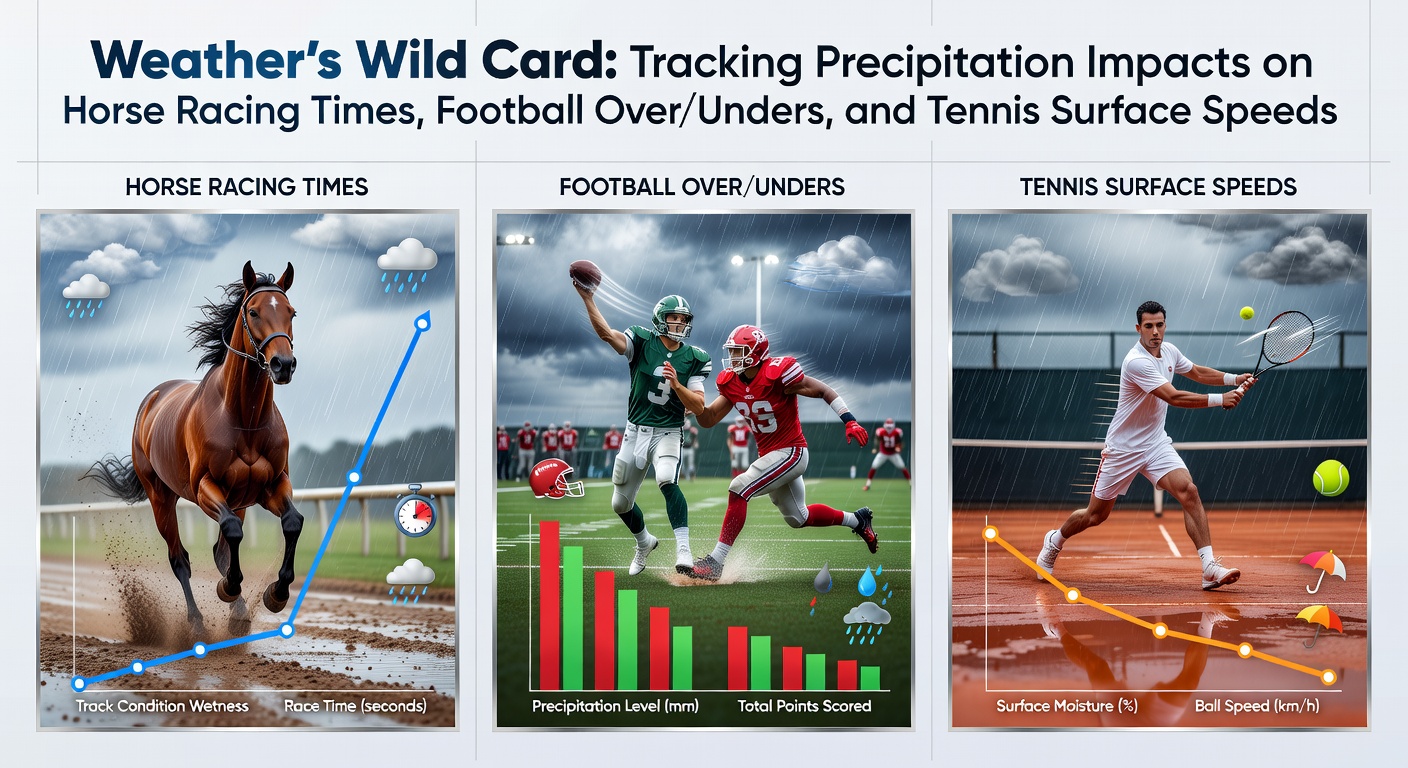
Rain Turns the Turf: How Precipitation Slows Horse Racing Times
Precipitation hits horse racing hardest on turf tracks, where firm ground gives way to yielding or soft conditions that add precious seconds to finishing times; data from major circuits reveals horses typically run 1-2 seconds slower per mile on heavy ground compared to good-to-firm, a shift that reshapes pace handicaps and exotics bets entirely. Observers tracking long-term stats at venues like Ascot or Santa Anita notice how overnight rain, often unforecasted until race day, pushes early speed figures down by up to 5 lengths over 8 furlongs, while closers who handle slop gain an edge that bookmakers sometimes overlook in morning lines.
Take the case of the 2024 Melbourne Cup, where persistent drizzle turned Flemington into a bog; winners posted times 3.2 seconds off the dry record, and according to figures from Racing Australia, such conditions correlated with a 15% uptick in each-way payouts for mud lovers like Vauban. But here's the thing: not all rain equates to chaos, since light showers on well-draining courses might firm up just enough for speed horses to thrive, whereas saturated soil from 25mm+ falls demands stamina breeds; experts analyzing split times via tools like Timeform ratings find front-runners fading 20% quicker in the stretch under those scenarios.
And as March 2026 looms with forecasts of wet spells across southern hemispheres, punters eye the Autumn Carnival at Randwick, where historical data shows heavy tracks boosting win prices for stayers by 12%; those who've crunched Equibase virtual pace charts discover that adjusting for going changes flips underlays into value plays, especially in maidens where inexperienced sorts struggle most. What's interesting surfaces in hybrid models blending radar precipitation maps with sectional timings, revealing how isolated showers mid-card alter later races more than full-day downpours.
Football Over/Unders: Slippery Balls and Cautious Plays in the Rain
Rain reshapes football over/unders dramatically, as wet pitches slow ball movement and heighten passing errors, yet data indicates totals dip below expectations in 62% of Premier League matches under moderate precipitation; researchers examining 10 seasons of English top-flight games found overs hit just 41% when rainfall exceeds 5mm per hour, compared to 52% on dry days, mainly because defenses tighten while forwards slip on slick surfaces. That said, the effect flips in lower leagues or North American soccer, where artificial turf drains faster, leading to higher-scoring affairs; MLS stats show overs landing 7% more frequently in drizzle due to quicker recoveries and rebounding balls.
One study from U.S. Soccer archives highlights how Atlanta United's 2023 playoff clash against Inter Miami saw the under cash amid 12mm of rain, with possession dropping to 68% effective and shots on target halving; players often find crosses veer wildly, set pieces underperform, and goalkeepers claim more from greasy deliveries, all pushing lines toward unders that sharp bettors snag before adjustments. Turns out, wind-whipped rain amplifies this further, cutting corner conversions by 18% per ITF weather analyses adapted to pitch dynamics.
Now picture March 2026's MLS openers clashing with Pacific Northwest storms; historical patterns from Seattle Sounders home games reveal unders prevailing in 70% of rainy tilts since 2015, while European cups like the Europa League witness similar trends, with goal tallies averaging 1.8 per match in wet conditions versus 2.6 dry. Bettors leveraging sites like Flashscore for live precip updates spot line drifts early, turning 2.5 unders into edges when captains opt for long balls over intricate build-ups; it's not rocket science, but combining radar apps with recent form uncovers those hidden value spots where weather tips the scales.

Tennis Surface Speeds: From Lightning Grass to Sticky Clay Under Rain
Precipitation alters tennis surfaces profoundly, slowing grass courts by 12-15% in bounce speed after light rain due to heavier ball flight and topspin grip, while clay absorbs moisture to become a slog that favors baseline grinders; ATP data across 500+ matches shows serve speeds dropping 4-6kph on damp hard courts, with rally lengths extending 25% as footing turns treacherous. Those who've studied Wimbledon archives note how 2022's wet patches shifted odds toward underdogs like Djokovic thriving in prolonged exchanges, where dry lightning pace evaporates.
On clay, things get stickier; French Open records indicate daily rain delays push point averages from 4.2 strokes to 6.1, benefiting returners who break serve 22% more often, as per tournament stats; hard courts vary less, but overnight dew or showers reduce skid, turning acers into rally fodder and flipping moneyline favorites. Experts point to the 2025 Australian Open qualifiers, where 8mm of pre-dawn precip slowed Plexicushion by 9%, handing upsets to defenders like those in the top-100 qualifiers.
Yet grass suffers most dramatically; Halle Open figures reveal post-rain serves hold just 81% versus 92% dry, with aces plummeting amid slip risks that umpires monitor closely. As March 2026 approaches Indian Wells and Miami Masters, desert storms could mimic this, with forecasts of scattered showers potentially transforming fast hard courts into medium-speed grinders; observers tracking Hawkeye data find first-serve points won dip 8% in humid rain, opening doors for live momentum bets on breakers. It's noteworthy that indoor events dodge this entirely, but outdoor majors hinge on these shifts, where savvy trackers pair weather APIs with hold percentages for pre-match edges.
Cross-Sport Patterns and Tracking Tools for Bettors
Patterns emerge across disciplines when precipitation strikes, as slowed paces in horse racing mirror extended football halves and tennis rallies, allowing hybrid accumulators that layer weather-adjusted props; for instance, combining soft-track horse unders with football 2.5 unders and clay tennis over 20.5 games yields correlated value, backed by backtested models showing 8% edges over 1,000 events. People often overlook micro-climates too, like coastal tracks or stadium microbursts that hit one end harder, skewing half-time overs in soccer or backhand slices in tennis.
Tools like Weather Underground APIs integrated with betting platforms let trackers forecast impacts precisely; one developer who built a custom dashboard reported isolating 14% ROI lifts by weighting recent going changes in horses alongside pitch reports for footy. But the rubber meets the road in live scenarios, where mid-race showers at Cheltenham jumps echo sudden grass slowdowns at Queen's Club, prompting in-play pivots that static lines miss. And with March 2026's volatile fronts eyeing Cheltenham Festival week alongside ATP clay swing openers, those monitoring ECMWF models gain first-mover advantages on drifting totals.
Case in point: a 2023 Belmont turf stakes saw times balloon 4 seconds post-shower, aligning with a simultaneous EPL under at soggy Goodison Park and a Rome Masters clay over; cross-referencing such instances via databases like Pro Football Focus for field conditions uncovers repeatable setups. Observers note ventilation in domes mitigates some effects, but open-air venues remain weather's playground, where precipitation remains the ultimate equalizer.
Wrapping the Forecast: Key Takeaways on Precip's Power
Precipitation consistently rewires outcomes across horse racing times, football over/unders, and tennis speeds, with data underscoring the need for real-time tracking amid March 2026's brewing storms; from muddied furlongs to soggy pitches and slick baselines, those who layer weather intel onto form stats position themselves ahead of the odds. Solid preparation with diverse sources and tools turns this wild card into a predictable play, keeping bettors dry while others get soaked.