Referee Rotation Impacts: Building Stronger Accumulators by Factoring Official Tendencies in Football and Basketball Leagues
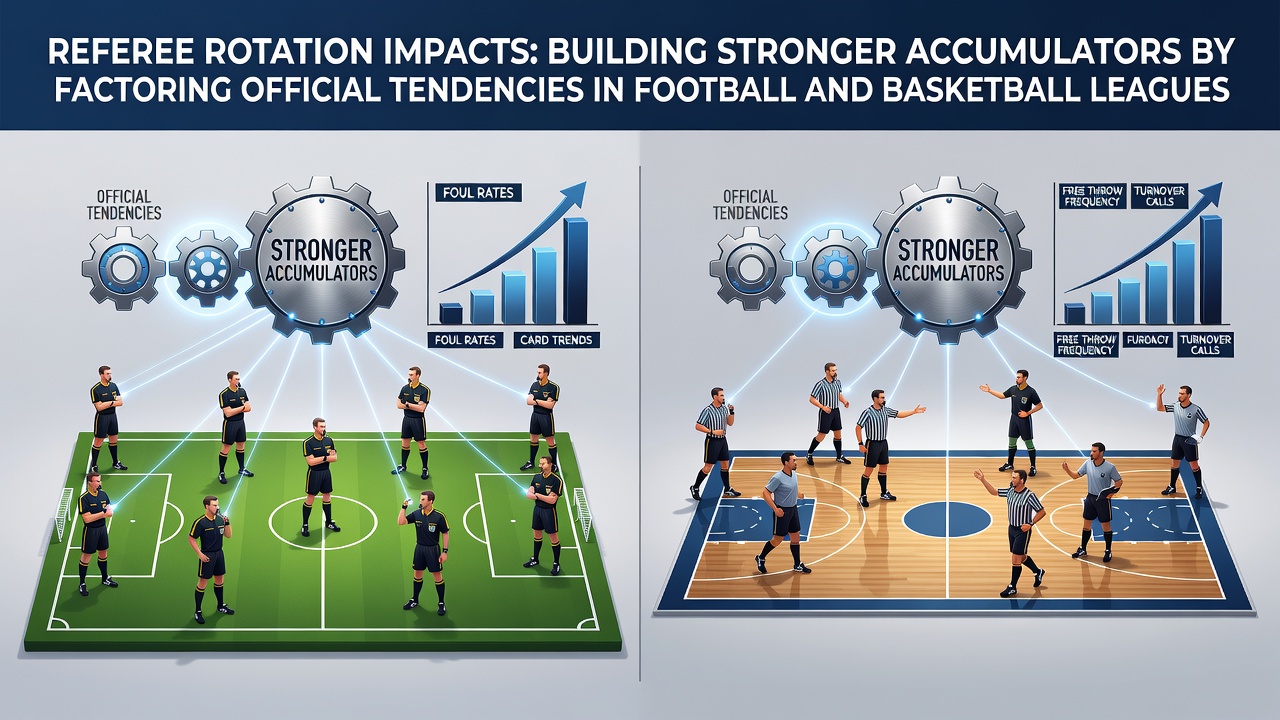
Referee rotations across football and basketball leagues create measurable patterns that influence game outcomes in ways that extend directly into accumulator construction, and data from multiple seasons shows how these schedules align with statistical tendencies in fouls, cards, free throws, and point totals. Leagues publish rotation lists weeks in advance, which allows systematic tracking of individual officials and their historical calls in specific venues or match types. In July 2026 several European football federations and the NBA released preliminary rotation calendars for the upcoming campaigns, giving analysts fresh datasets to cross-reference with historical performance metrics.
Core Patterns in Football Referee Assignments
Football leagues rotate match officials to maintain neutrality, yet each referee carries distinct tendencies that surface repeatedly across competitions. Certain officials issue more yellow cards in away fixtures while others maintain lower foul counts when teams employ high-pressing styles, and researchers at the University of Sydney documented these variances through longitudinal studies covering multiple domestic leagues. When an accumulator includes goal-line or card markets, matching the assigned referee's profile to the tactical approach of both sides produces tighter probability estimates than generic league averages allow.
Rotation frequency also matters because officials who travel between countries or work back-to-back weekends exhibit slight shifts in decision thresholds, particularly in the final twenty minutes when fatigue among players rises. European governing bodies publish these schedules through their official channels, enabling bettors to layer referee-specific adjustments onto team form data without relying on subjective impressions.
Basketball Referee Tendencies and Rotation Effects
Basketball rotations follow a similar logic but operate under a three-official system that multiplies the number of variables per game. NBA and FIBA schedules indicate which crews work which nights, and statistical services record how each crew's foul differential correlates with pace and defensive schemes. One study released by Michigan State University examined over 1,200 games and found that crews with higher historical free-throw disparity rates produced elevated point totals when both teams ranked in the upper quartile for drives to the basket.
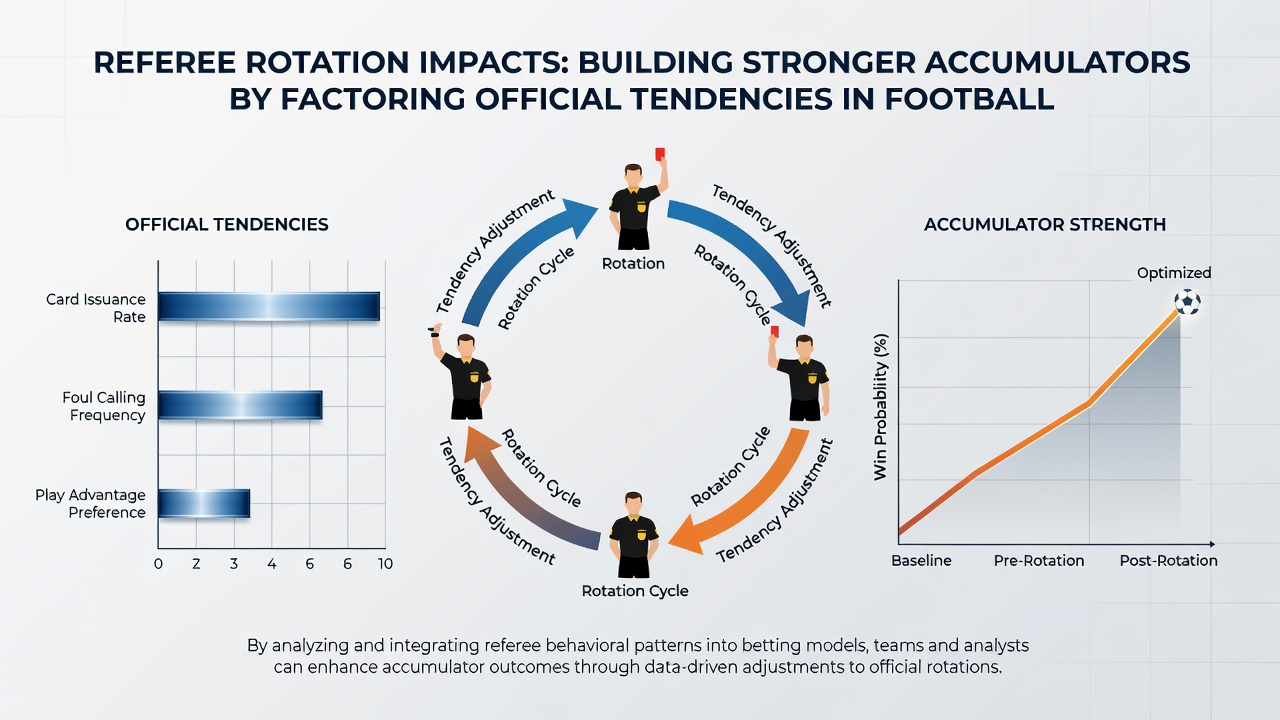
These crew-level patterns become especially relevant for live accumulator segments that combine basketball player props with football over/under lines. Because basketball games run on tighter timeframes, a single official's preference for calling defensive three-second violations or loose-ball fouls can shift scoring margins inside a single quarter, and rotation data makes it possible to anticipate which crews are scheduled for high-pace matchups.
Integrating Rotation Data into Accumulator Construction
Accumulator builders combine multiple legs across sports by aligning referee profiles with market lines that respond most directly to those profiles. A football leg focused on cards pairs naturally with a basketball leg focused on total fouls when both officials share elevated historical rates, while neutral referees allow emphasis on team-specific metrics instead. Data providers release referee databases that include venue splits, time-of-season trends, and disciplinary averages, which analysts merge with fixture lists released each summer.
Cross-sport sequencing benefits when rotation calendars overlap, such as midweek football fixtures and NBA back-to-back sets. Observers note that officials returning from international duty often display tighter foul thresholds in their first domestic assignments, a pattern visible in both football and basketball records. This information feeds directly into accumulator timing, allowing selection of legs that exploit or avoid the expected deviation from seasonal norms.
Data Sources and Verification Methods
League websites, official statistics portals, and independent research repositories supply the raw numbers required for these adjustments. Figures from the Australian Sports Commission illustrate how referee workload correlates with call consistency across codes, while academic papers hosted on institutional repositories provide peer-reviewed models for translating those numbers into probability shifts. Verification involves matching published rotation lists against final score sheets and disciplinary logs after each round, confirming whether observed outcomes align with prior referee-specific baselines.
Continuous monitoring through the 2026-2027 seasons will further refine these datasets, particularly as leagues introduce new technology-assisted review protocols that alter the decision environment for certain officials.
Conclusion
Referee rotation schedules deliver structured information that accumulator strategies can incorporate through direct statistical mapping rather than anecdotal adjustment. Football and basketball leagues both publish these schedules, and the resulting datasets support precise alignment between official tendencies and market segments most sensitive to those tendencies. Systematic application of rotation data across multiple sports therefore expands the factual foundation available for constructing accumulators that reflect documented patterns instead of league-wide averages alone.