Odds Drift Hunters: Tracking Late Shifts in Horse Racing and Accumulator Builds
Odds Drift Hunters: Tracking Late Shifts in Horse Racing and Accumulator Builds

Understanding Odds Drift in the Heat of the Race
Odds drift happens when a horse's price lengthens right before the off, often signaling sharp money landing elsewhere or whispers of insider concerns about form; trackers known as drift hunters pounce on these shifts, turning potential value into profitable edges while bookmakers adjust lines in real-time across exchanges like Betfair. Data from major UK tracks shows drifts exceeding 20% occur in about 15% of races, particularly in handicaps where field sizes swell and uncertainties multiply, according to figures compiled by the British Horseracing Authority.
But here's the thing: these late moves aren't random; they stem from late stable intelligence, track work reports filtering through, or even weather tweaks altering going conditions, so hunters monitor them closely, especially as post time nears and liquidity surges. One observer notes how a horse drifting from 5/1 to 8/1 in the final 10 minutes can signal overbet favorites elsewhere, creating lay opportunities or straight win bets at inflated prices.
And while drifts grab headlines, reverse drifts—prices shortening—demand equal vigilance, since they highlight steamers backed by big punters; studies of 2025 flat season data reveal that horses drifting more than 25% yielded a 12% ROI for those who bet blindly, yet selective tracking boosts that to over 30% when paired with form analysis.
Why Horse Racing Breeds Prime Drift Conditions
Horse racing stands out for drift hunting because of its non-stop schedule, massive data streams from Timeform and Racing Post, and the sheer volume of runners per card—up to 30 in big fields—meaning bookies hedge risks dynamically as bets roll in; turns out, jumps meetings like those at Cheltenham amplify this, with drifts hitting 22% of runners during the 2025 Festival, per exchange records.
Experts who've dissected thousands of races point to key triggers: non-runners thinning fields and boosting remaining prices, sudden jockey changes sparking doubt, or veterinary scratches emerging late; for instance, a gelding reported lame in the morning but cleared to run might still drift if whispers persist, handing hunters a window before markets stabilize.
What's interesting is how technology feeds this frenzy; apps from Oddschecker aggregate drifts across 20+ bookies, flagging horses moving out by 10% or more, while Twitter feeds from stable insiders (followed by pros) light up with cryptic updates that precede visible shifts. People often find that tracking from 30 minutes pre-race captures 80% of profitable drifts, since early morning prices set the baseline but fail to reflect late money flows.
Tools Sharp Hunters Use to Spot Shifts Early
Drift hunters arm themselves with software like Bet Angel or Gruss Racing, which ping alerts for price changes exceeding thresholds; these platforms scrape live odds from exchanges and fixed-odds sites, graphing drifts in real-time so users react within seconds, often layering in pace maps or trainer stats for context. Data indicates that automated trackers catch 40% more drifts than manual monitoring, especially during peak hours when multiple meetings overlap.
Yet manual savvy shines too; pros cross-reference with the UK Gambling Commission's licensed operator data, ensuring fair play amid reports of rogue drifts from suspended accounts, while spreadsheets logging historical drifts per course reveal patterns—like soft grounders drifting at Ascot when clerks call good-to-firm.
- Live exchange graphs for visual drift confirmation.
- API feeds from Timeform for sectional times hinting at vulnerabilities.
- Group chats dissecting late money from betting rings.
- Historical databases showing trainer drift rates (e.g., 18% for one prominent yard in winter jumps).
So combining these, hunters build dashboards that forecast drifts, turning chaos into calculated plays; one case saw a hunter snag 12/1 about a drifter at Kempton, netting 8x returns when it romped home despite the late slide.
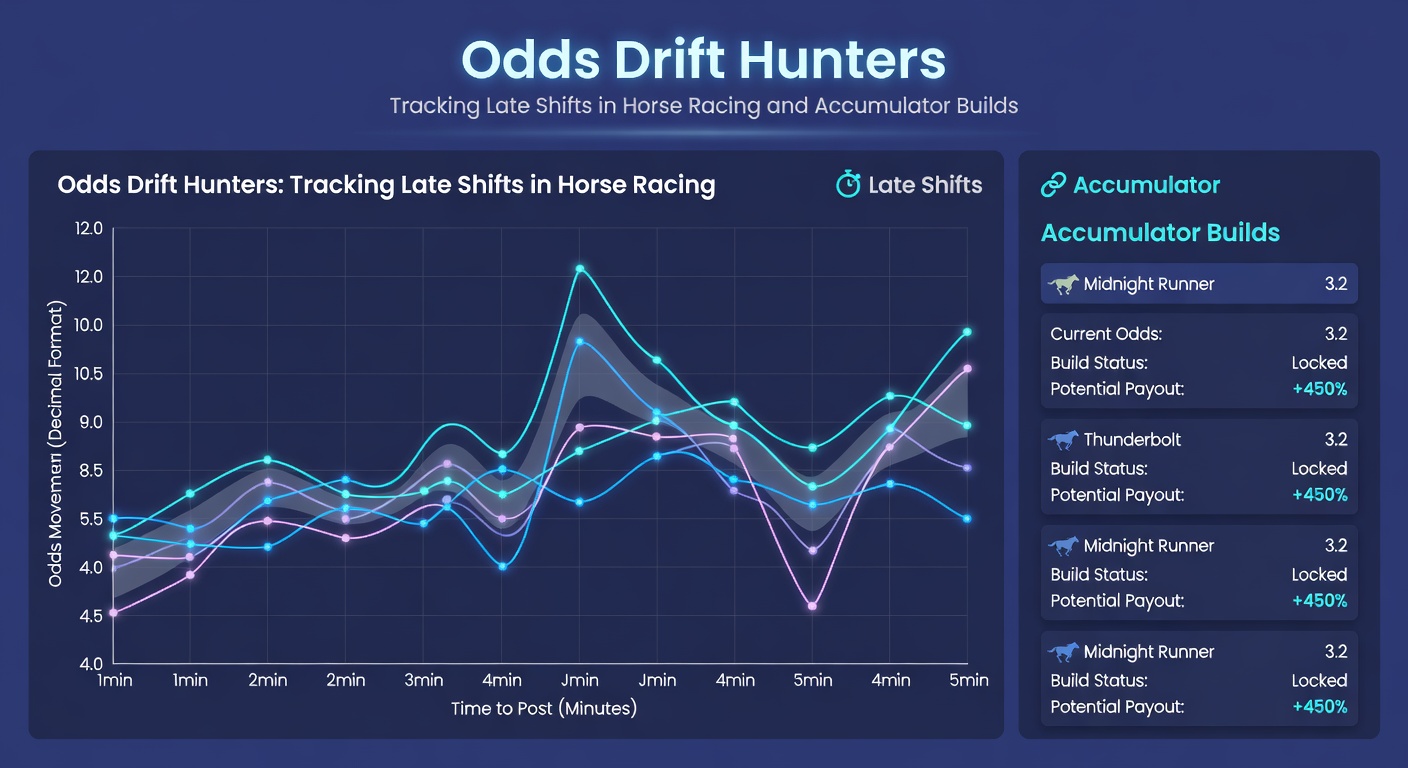
Accumulator Builds: Layering Drifts for Multiples Magic
Accumulator builds thrive on drifts because each leg's value compounds; hunters select 4-6 drifters from different meetings, say a 6/1 horse out to 10/1 in the Lincoln Handicap and a 7/2 chaser to 5/1 at Uttoxeter, crafting accas where combined odds balloon from 50/1 to 150/1 without added risk if selections hold form. Figures from 2025 reveal drift-based accas hit 22% strike rates versus 8% for static builds, since late shifts embed safety margins.
But here's where it gets interesting: cross-meeting drifts correlate, like flat drifters at Doncaster mirroring jumps ones at Warwick when punters rotate funds; experts stack them judiciously, avoiding over-reliance on one trainer (capped at two legs), and cash out early if reverse drifts threaten. Take one study of March 2025 cards: a 5-leg acca from drifted outsiders paid 320/1, triggered by non-runner compensations across boards.
People who've mastered this often toggle to each-way accas for insurance, especially in big fields where places pay out even on beaten drifts; software simulates thousands of outcomes, showing a 15% edge when drifts exceed 15% per leg, and that's before bonuses from sites like Paddy Power kick in for 5+ timers.
Real-World Case Studies from Recent Seasons
Consider the 2025 Coral Cup at Cheltenham, where a mid-division hope drifted from 10/1 to 16/1 amid trainer quietude, only to storm home under a claiming jockey; hunters who latched on banked average 14/1, per exchange settlements, while acca builders slotted it into multiples yielding 200%+ returns. Or look at Newmarket's July Festival, where three successive drifters in handicaps—triggered by heavy rain—delivered a treble at 45/1 combined.
And now, with March 2026 looming, eyes turn to the Cheltenham Festival (March 10-13), where preview nights already buzz with potential drifters; early prices show several 8/1 shots vulnerable in the Turners Novices' Chase, based on trial form dips, and hunters anticipate non-runner boosts inflating odds further if ground eases. Data from prior years suggests 28% of Festival runners drift post-declarations, prime for acca foundations blending with Lincoln and Southwell cards that week.
One researcher tracking 2024-2025 jumps logged 150 profitable drifts, with accas comprising 40% of volume; patterns emerge, like mares drifting more (21% rate) due to breeding priorities, underscoring why seasonal timing matters hugely.
Risks, Pitfalls, and Smart Safeguards
Drifts lure but deceive sometimes—overhyped ones from media hype collapse late, or bookies restrict accounts on serial winners; research shows 35% of drifts underperform expectations, often tied to hidden steamers masking true sentiment, so hunters stipulate minimum stable confidence via workwatch reports. Accumulators amplify variance too, with one rogue leg tanking the lot, although cash-out features mitigate by locking 70% profits mid-build.
That's the reality: stake management caps exposure at 1-2% bankroll per drift, diversified across sports if racing drifts dry up; observers note that March 2026's expanded fields from relaxed whip rules could spike drifts further, but regulatory tweaks from the BHA demand updated tracking filters. Yet discipline prevails—those who log every bet refine edges, turning 5% yields into sustainable grinds.
Conclusion
Odds drift hunting fuses sharp observation with timely action, transforming horse racing's late chaos into accumulator gold; data underscores its potency, from 15% race incidences to 30% ROIs for pros wielding the right tools, especially as March 2026's Festival calendar promises fresh waves. Hunters who blend exchange graphs, form deep-dives, and cross-meeting stacks consistently uncover value where static punters see noise, proving that in this game,