Navigating Schedule Density and Venue Adaptations in Determining Probabilities for Multi Sport Combination Wagers

Schedule density creates measurable shifts in team and athlete output across soccer, basketball, tennis, and horse racing, while venue adaptations introduce variables such as travel distance, surface changes, and altitude that analysts incorporate into probability calculations for combination wagers. Observers note that these factors interact in ways that alter expected outcomes when bettors combine selections from multiple sports into single accumulators, particularly during periods of fixture congestion like those seen in May 2026 when European soccer leagues reach their final rounds alongside ongoing NBA playoff schedules and ATP clay-court swings.
Schedule Density Patterns Across Disciplines
League calendars pack multiple games into short windows, and data from governing bodies show that recovery time directly influences performance metrics such as goals scored in soccer or points allowed in basketball. Researchers at the Australian Institute of Sport have tracked how consecutive matches with less than 72 hours between them correlate with drops in sprint distance and passing accuracy, figures that feed into models for hybrid accumulators pairing late-season football fixtures with tennis matches on the same weekend. Those who study fixture lists observe that May 2026 presents a concentrated stretch where domestic cups overlap with international qualifiers, forcing teams to rotate squads and thereby shifting implied probabilities when these games combine with basketball overtimes or horse racing events at varying tracks.
Venue Adaptations and Their Statistical Impact
Travel between venues alters physiological responses, and studies indicate that long-haul flights reduce reaction times in tennis players while affecting stamina in soccer squads that move between domestic grounds and neutral-site tournaments. Altitude differences at certain stadiums produce documented changes in ball flight and endurance, patterns that analysts cross-reference with basketball arena climates when constructing multi-sport probabilities. Surface transitions matter equally in horse racing where track conditions vary by region, and observers record how these elements compound when a bettor links a clay-court tennis set with a turf racing outcome and a football match played on artificial grass.
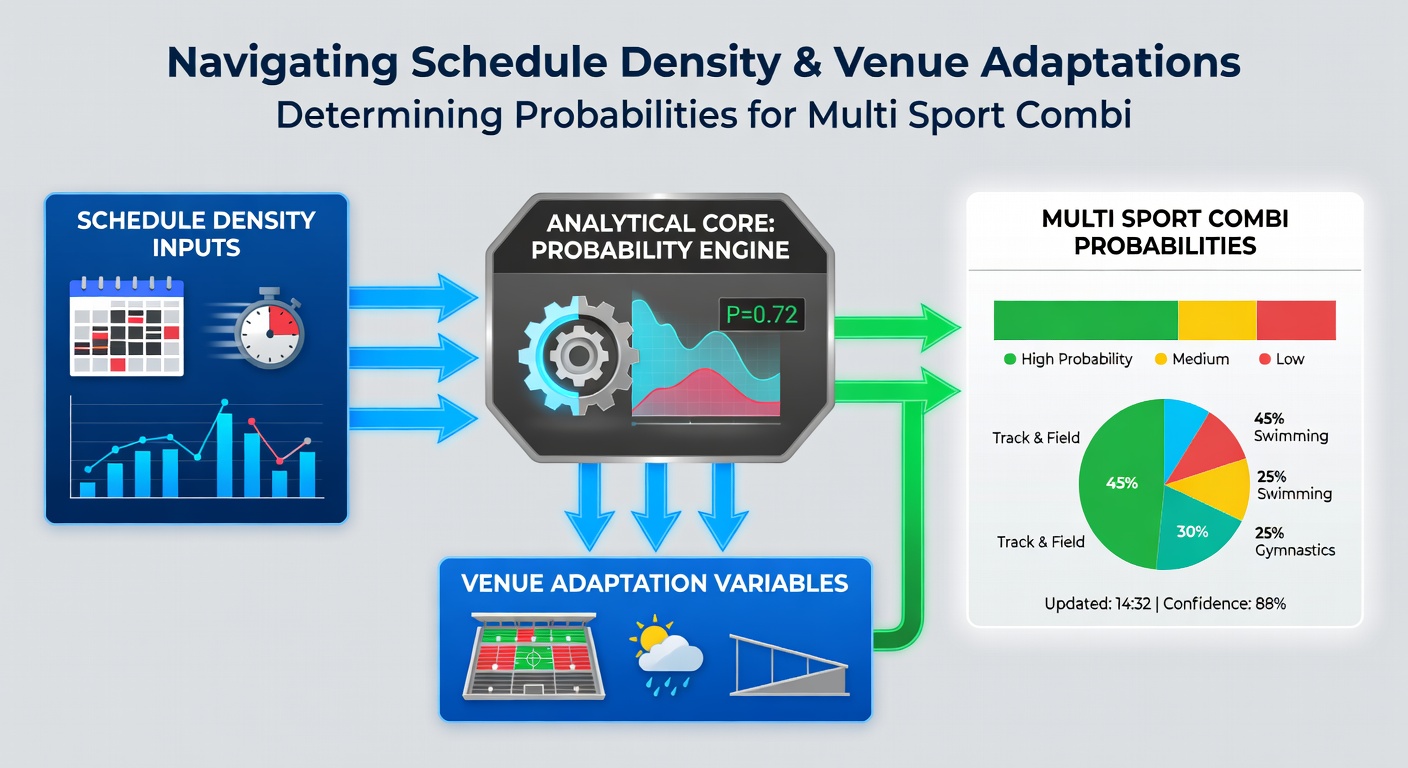
Combining Variables in Accumulator Models
Probability frameworks integrate schedule density and venue data through layered statistical adjustments rather than isolated assessments, and industry reports reveal that successful multi-sport sequences often weight recovery metrics alongside historical venue performance. Take one case where analysts adjusted a football goal-line selection downward after noting three prior congested fixtures for the same squad, then paired it with a tennis spread that accounted for recent transcontinental travel. The approach relies on datasets that quantify fatigue accumulation and environmental effects, allowing models to recalibrate implied probabilities before the accumulator locks in.
Regulatory frameworks in different jurisdictions encourage transparent data use in betting products, and the Nevada Gaming Control Board publishes guidelines that operators follow when displaying odds influenced by travel and fixture factors. These standards help ensure that combination wagers reflect current schedule realities instead of static assumptions. Yet the process remains dynamic because new information about squad rotations or last-minute venue changes continues to arrive throughout May 2026 tournaments.
Practical Application in Live and Pre-Match Markets
Real-time monitoring tools track in-game fatigue indicators that stem from dense schedules, while venue-specific statistics update probabilities for ongoing events. People who build accumulators across sports often layer basketball fourth-quarter totals with soccer second-half lines when both contests occur after short turnaround periods, adjusting the overall multiplier according to documented recovery curves. Data shows that such adjustments produce tighter probability ranges when venue adaptations receive equal attention, particularly in sequences that span continents and multiple disciplines within a single betting slip.
Conclusion
Effective navigation of schedule density and venue adaptations requires systematic incorporation of recovery data, travel metrics, and historical venue outcomes into probability models for multi-sport combination wagers. Analysts continue to refine these inputs as calendars evolve, and the resulting adjustments help align accumulator odds with observed performance patterns across soccer, basketball, tennis, and horse racing during concentrated periods such as May 2026.