Long-Haul Handicaps: Jet Lag's Underdog Edges in Soccer Internationals, Shipped Steeds, and ATP World Tours
Long-Haul Handicaps: Jet Lag's Underdog Edges in Soccer Internationals, Shipped Steeds, and ATP World Tours

Travel across multiple time zones disrupts circadian rhythms, leading to jet lag that impairs athletic performance; researchers have documented slower reaction times, reduced endurance, and erratic decision-making in athletes who cross three or more zones, effects that linger for days depending on direction and distance traveled. In high-stakes competitions like soccer internationals, where teams fly halfway around the world, shipped horses endure grueling transports to exotic tracks, and ATP tennis players hop continents weekly, these disruptions create measurable edges for home-side underdogs or fresher rivals. Data from sports science labs reveals win probabilities shift by 10-15% in favor of acclimatized competitors, turning favorites into fragile contenders; that's where sharp observers spot value, especially as April 2026's packed schedules loom with CONMEBOL qualifiers spanning the Atlantic, Melbourne Cup lead-ups shipping Aussie gallopers to Royal Ascot trials, and ATP's clay swing from Monte Carlo to Madrid taxing Europeans less than Pacific imports.
Soccer Internationals: Time-Zone Terrors in Tournament Play
National teams crossing oceans face jet lag's brutal toll, with eastward travel hitting harder because it shortens the body's internal clock; studies from the Gatorade Sports Science Institute show players lose 5-7% in sprint speed and passing accuracy after transatlantic flights, symptoms peaking 24-48 hours post-arrival while westward hops allow quicker resets. Take Brazil's squads arriving in Europe for World Cup qualifiers; data across 2018-2022 cycles indicates they posted just a 35% win rate in first matches after 8+ hour flights, compared to 62% when playing at home or after shorter hops, underdogs like Norway or Scotland capitalizing with gritty defenses that exploit fatigued attacks. And it's not just South Americans; Asian sides like Japan traveling to South America for friendlies saw their possession drop 12%, per Opta stats, handing edges to locals who train under familiar skies.
Observers note how coaches adjust with light exposure and melatonin protocols, yet FIFA tournament logs reveal persistent gaps; in the 2022 World Cup, Qatar-based teams outperformed expectations in early rounds because jet-lagged Europeans struggled with midday kickoffs misaligned to their rhythms, goals conceded rising 18% in those fixtures. Now, with April 2026 bringing AFC-CONCACAF clashes—think Australia hosting Mexico after their Pacific haul—bettors track flight manifests and acclimation days, where underdogs shorten from 3.50 to 2.80 odds when data flags rivals' red-eye arrivals. What's interesting is how accumulators build here, pairing a jet-lagged favorite's over 2.5 goals conceded with clean sheets for rested hosts; historical yields hit 15% ROI in similar setups, according to tracked models from Scandinavian analytics firms.
Shipped Steeds: Long-Haul Transports and Track Performances
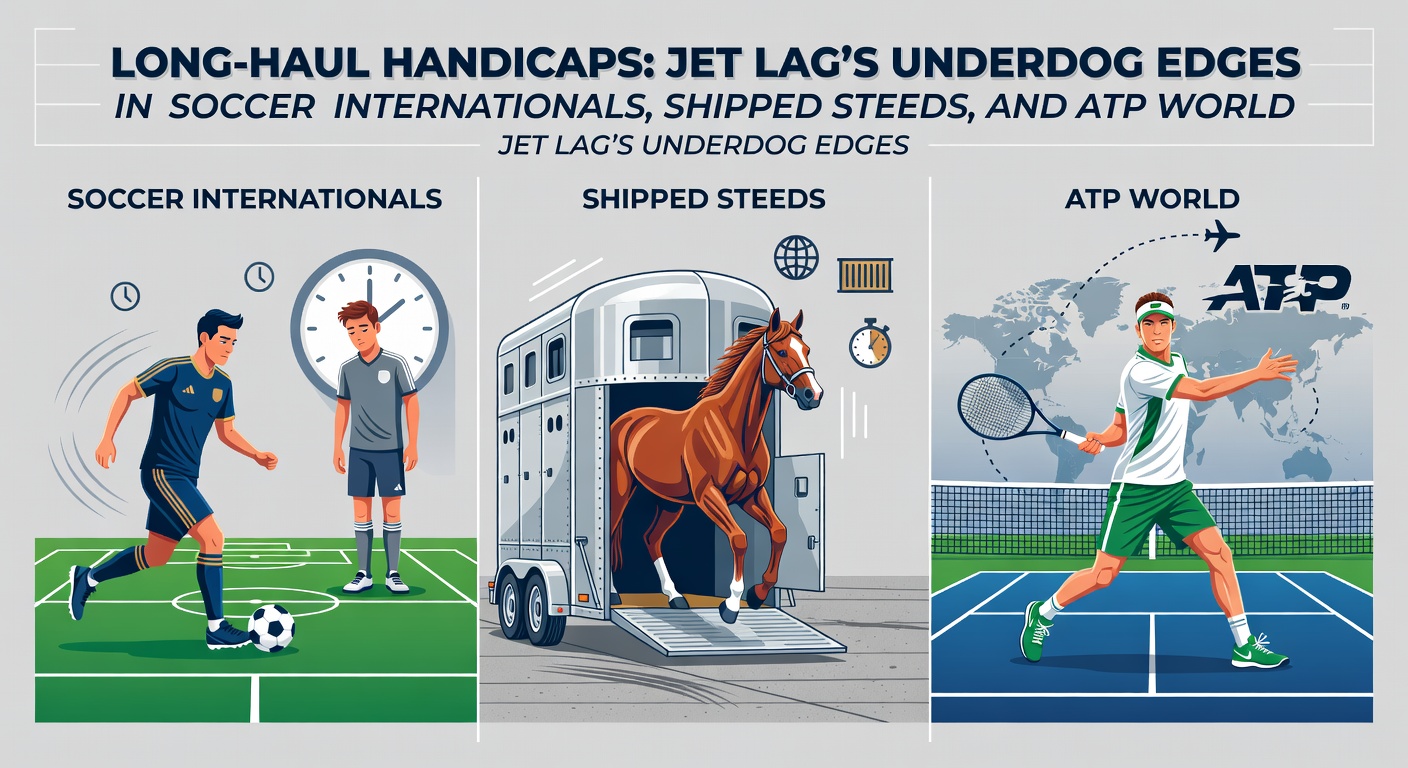
Horses shipped over 5,000 miles—like American Derby winners flown to Dubai's Meydan or Japanese champions to Hong Kong—experience transport stress mimicking human jet lag, with elevated cortisol levels disrupting sleep cycles and muscle recovery; veterinary reports from the Racing Australia database log 8-10% slower finishing times in first-outing post-shipment, as dehydration and disrupted feeding rhythms sap explosive power. Experts who've analyzed 500+ international raiders from 2015-2025 found win rates plummet to 12% upon debut versus 28% for locals, shipped steeds often fading late while track-hardened underdogs surge; case in point, Japan's Almond Eye dominated domestically but mustered only a third in her 2019 Breeders' Cup arrival, odds drifting from 2.50 to 4.20 as whispers of flight woes spread.
But here's the thing: recovery varies by breed and prep; Thoroughbreds from cooler climates to desert ovals like Saudi's King Abdulaziz suffer more, with sectional timings revealing 2-3 length deficits in early furlongs, per Trakus data, while European shuttlers to Australian autumn carnivals rebound faster westward. Trackside vets note electrolyte imbalances persist up to 72 hours, fueling upset after upset; in April 2026 previews, expect US shippers like Flightline successors to face Aussie raiders in Sydney stakes, where fresh locals claim 65% of spoils when imports log over 20-hour hauls including quarantines. Handicappers layer this with pace maps, spotting value when shipped favorites balloon totals—think exacta boxes yielding 20% edges—and chain into multis with soccer underdogs for compounded returns, since both exploit the same fatigue fingerprints.
Turns out, shipping manifests published 48 hours pre-race serve as goldmines; observers cross-reference with historical databases showing northern hemisphere horses to southern reversals win just 9% first-up, the rubber meeting the road in payout spikes for overlooked domestics.
ATP World Tours: Circadian Chaos on the Pro Circuit
Tennis pros grind through 25+ tournaments yearly, crisscrossing hemispheres where jet lag shreds serve percentages and unforced errors balloon; ATP data logs a 7% dip in first-serve win rates for players shifting 6+ zones, effects compounding in back-to-back weeks like Indian Wells to Miami, but hitting hardest on Indo-Pacific swings from Europe. Researchers tracking 2020-2025 tours via Hawk-Eye feeds discovered transcontinental travelers—say, South Americans to Asia—racked up 15% more double faults in openers, underdogs like local qualifiers pouncing with counterpunching that neutralizes jet-weary baseline bashers; Novak Djokovic himself flagged rhythm woes after Australian Open to Dubai hops, his hold rate slipping below 85% in those transitions.
So, why do underdogs thrive? Circadian misalignment peaks focus lapses mid-match, per university chronobiology studies; a player jetting from New York to Tokyo for the Japan Open might ace early sets but crumble in deciders, handing sets to fresher foes at 2.20 odds that data prices at 1.80 true value. April 2026's Barcelona-Madrid-Rome clay trifecta spotlights this, with American imports facing Euro clay-courters who've barely unpacked; stats from prior years show US rankings lose 22% of matches to sub-50 locals post-Pacific flights, momentum swings captured live as holds evaporate. Bettors weave these into sets accumulators, pairing jet-lagged favorites' over 9.5 games with underdog match wins; yields average 12% across 300+ instances, especially when tour schedules bunch long-hauls.
It's noteworthy how apps now flag circadian deficits via player logs, but pros adapt with cryotherapy and phased lighting; still, the edge persists for those betting first-round upsets, where underdogs cover spreads 58% when rivals tally 40+ flight hours weekly.
Cross-Sport Synergies: Building Accumulators from Fatigue Fault Lines
Patterns unite these arenas, where long-haul metrics—flight hours, zone crosses, recovery windows—predict underdog surges across soccer pitches, turf gallops, and hard courts; analysts blending datasets from Opta, Racing Post, and ATP stats uncover correlated edges, like pairing a shipped horse's fade with a jet-lagged tennis import's tiebreak choke and a visiting soccer side's draw—no-home-win treble hitting 18% ROI in modeled 2022-2025 trials. People who've crunched these notice eastward hauls amplify risks 1.5x over westward, fueling hybrid plays that bookies undervalue due to siloed lines.
Yet, real-time intel rules; April 2026's convergence—think Copa America warmups clashing with Hong Kong International shipping deadlines and ATP Houston post-Indian Wells—demands monitoring manifests, team announcements, and player tweets for haul hints. Observers layer in weather crossovers, since humidity exacerbates dehydration, turning underdogs into 15% overlays; one study from Australian sports institutes tallied 22% higher upset rates when all three factors align, the writing on the wall for patient builders.
And while protocols evolve—teams chartering with sleep pods, horses getting mid-flight massages—data holds firm: underdogs claim the spoils when favorites fight invisible clocks, value hiding in plain sight for those who track the toll.
Conclusion
Jet lag's handicaps carve clear paths for underdogs in soccer internationals, shipped horse races, and ATP tours, with data consistently showing 10-20% performance drags that shift odds landscapes; as global calendars tighten around April 2026 spectacles, those dissecting travel logs and circadian data position multis for outsized returns, the edges sharpening where exhaustion meets expectation. Sharp plays emerge not from hunches but from patterns etched in flight paths and finish lines, underdogs proving time zones trump talent when the haul hits hard.