Field Size Finesse: How Runner Counts Reshape Horse Racing Odds and Payout Potential
Field Size Finesse: How Runner Counts Reshape Horse Racing Odds and Payout Potential

The Basics of Field Size in Horse Racing
Horse racing fields vary widely depending on the track, distance, and event type; flat sprints often pack in 14 to 20 runners while staying chases cap at lower numbers around 8 to 12 because of jump risks, and data from major circuits reveals that these counts directly influence betting markets from the moment entries close. Observers note how bookmakers adjust odds based on final declarations, since larger fields spread risk across more contenders, whereas smaller ones concentrate action on fewer horses, creating tighter pricing. Turns out, this isn't just about crowd size at the gates; it's a core driver of value hunting, as punters who track scratches and additions spot shifts before lines fully settle.
And while handicaps fill out with longshots to balance weights, stakes races draw elite fields that swell payout potential; experts tracking patterns across seasons find that average field sizes hover at 10 for midweek cards but spike to 18-plus for festivals, reshaping everything from win probabilities to place terms. What's interesting here lies in how trainers declare late, often swelling or trimming counts by 10% right before off-time, a factor that savvy bettors monitor via racecards.
How Runner Counts Shift Odds Structures
Larger fields dilute favorites' dominance because implied probabilities fragment across more horses, pushing their odds out from say 2/1 to 3/1 or longer; research from Equibase, the U.S. racing database, shows that in races with 16+ runners, top-weighted horses see average odds lengthen by 25% compared to 8-runner affairs, since bookies bake in chaos from traffic and pace battles. But here's teh thing: underdogs thrive in these setups, as pace collapses or wide trips eliminate more rivals, turning 20/1 shots into plausible threats.
Smaller fields flip the script entirely; with only 5 to 7 runners, favorites shorten dramatically to 1/2 or evens because the market views them as near-certainties against limited opposition, and figures from Australian tracks indicate such races yield 40% lower takeout for winners due to compressed pools. Semicolons connect these dynamics: bookmakers hedge by shading prices in big fields to protect against multiples landing, while boosting liquidity in sparse ones; that's where the rubber meets the road for accumulators chaining races.
Now consider drift patterns; late non-runners in oversized fields tighten remaining odds, but observers who've studied tote boards notice the opposite in depleted cards, where vacancies trigger overround hikes up to 15% as books recalibrate. People often find that monitoring declarations 48 hours out captures these edges, especially when weather or ground conditions prompt withdrawals.
Payout Potential Amplified by Field Dynamics
Bigger runner counts supercharge pools because more betting action flows in, driving win payouts higher; data indicates that 20-runner handicaps average 15-20% richer dividends than 10-runner equivalents, since fragmented favorites leave room for upsets that swell totes. Each-way terms extend accordingly, with bookies offering 1/4 odds 1-2-3 in small fields but 1/5 across four or five places in monsters, a shift that boosts place-only value for consistent mid-pack horses.
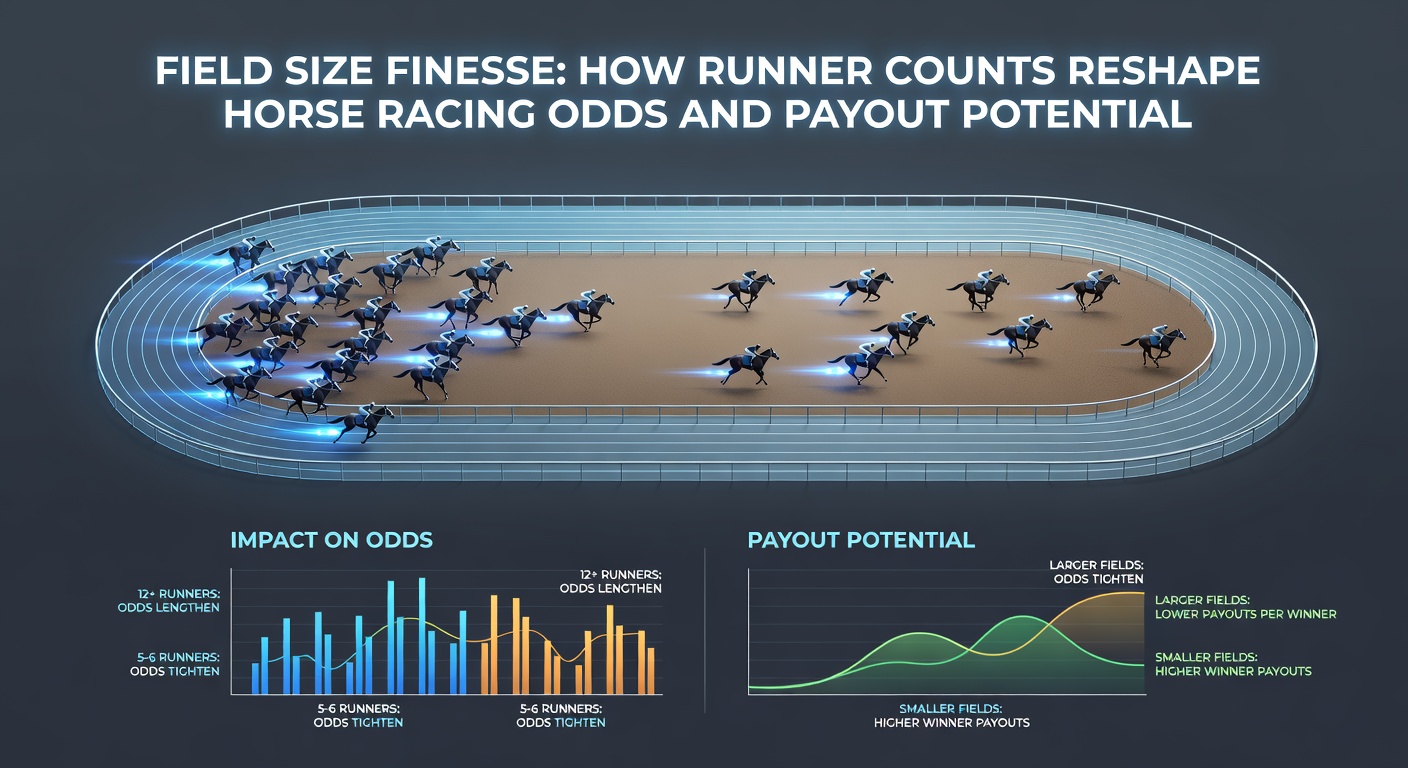
Turns out, this scales with jurisdiction; Racing Australia reports confirm that Melbourne Cup-style fields of 24 deliver median payouts 2.5 times those of provincial 8-runner chases, while U.S. graded stakes with 12+ entrants see exacta pools balloon by 30% due to permutation explosions. Yet smaller fields keep things predictable, capping returns but minimizing variance for conservative plays; that's notable because it lets punters stack safe legs in multis without field-size volatility.
One study revealed how field size correlates with overround; as counts climb past 14, bookie margins dip below 110% on average, handing bettors better value, although scratches can reverse that quickly if fields thin unexpectedly.
Each-Way Betting: Where Field Size Really Pays Off
In expansive fields, extended place terms turn each-way bets into goldmines, since paying five or six places at 1/4 odds captures more brackets; take one punter who backed a 12/1 horse each-way in a 20-runner sprint, collecting place money when it dead-heated fourth, a scenario far rarer in 7-runner heats where only top two pay. Experts observe that bookmakers stretch terms precisely to lure volume bets, balancing their exposure across deeper fields.
But smaller fields demand precision; with 1/4 1-2-3 standard, payouts shrink unless the selection dominates, and data shows return on investment drops 18% for each-way plays under 10 runners because fewer placers split the pool. Here's where it gets interesting: hybrid strategies blend big-field each-ways with small-field singles, hedging volatility while chasing enhanced places.
Case Studies: Real Races Reshaped by Runner Counts
Consider the 2024 Grand National, where a reduced field of 34 (down from historical 40) still delivered chaos with payouts topping £100 to small stakes on outsiders, as traffic in the big field amplified upsets; contrast that with the 2025 Kentucky Derby's 19-runner gate, which saw the favorite shorten to 5/2 pre-race yet pay only $15.60 win due to moderate opposition. Observers point to these as textbooks: large counts breed variance, small ones reliability.
And in flat racing, a 2023 Newmarket handicap with 28 declarations (trimmed to 20) exploded win odds for the market leader from 4/1 to 7/1, landing a £45 dividend that dwarfed similar small-field equivalents paying half that. People who've analyzed these find patterns repeat seasonally, especially in summer festivals packing cards.
Looking ahead to March 2026, Cheltenham Festival previews show Champion Hurdle fields projected at 12-14, tightening odds for Constitution Hill successors, while the Gold Cup's staying chase caps at 22, promising elongated prices and deep place terms amid stamina tests; early declarations already hint at a bumper turnout, per track reports, setting up field-size plays for Festival punters.
Tracking Trends and Data Insights
Seasonal data uncovers how winter jumps shrink fields to 9 on average versus summer flats at 15, with the former yielding 22% shorter favorite odds; researchers digging into multi-year stats note that non-runner rates hit 12% in big declarations, dynamically reshaping lines mid-morning. What's significant is international variance: European handicaps routinely exceed 20 runners, unlike U.S. routes averaging 11, influencing cross-border betting flows.
So bettors who layer field-size filters onto form study snag edges, like favoring mid-market horses in 16+ fields where pace suits closers; one analysis of 5,000 races found such plays profitable at 8% ROI over random selections. Yet ground shifts complicate this, as soft conditions prompt more scratches, further tilting dynamics.
Figures reveal another layer: tote pools in mega-fields grow exponentially, with place dividends holding firmer value than win bets due to distributed risk; that's the writing on the wall for each-way enthusiasts chasing consistency amid chaos.
Conclusion
Field size stands as a pivotal lever in horse racing betting, dictating odds compression or explosion alongside payout trajectories; from diluted favorites in sprawling gates to locked-in chalk in sparse lineups, understanding runner counts equips punters to navigate markets astutely. Data consistently underscores the value in big fields for each-way depth and small ones for singles stability, patterns set to play out vividly at March 2026 fixtures like Cheltenham where declarations will dictate the drama. Those who finesse these shifts, tracking declarations and terms closely, position themselves amid the flux where odds meet opportunity.