Crowd Dynamics Driving Performance Edges in Pitch and Court Sports
 Crowd dynamics shape performance outcomes across pitch and court sports through measurable influences on player physiology and decision-making patterns, and researchers continue to document these effects in controlled studies. Pitch sports such as football and rugby unfold in large open-air venues where sound waves travel differently than in enclosed arenas, while court sports like basketball and tennis occur in more contained spaces that amplify acoustics and direct pressure toward athletes. Data from performance tracking systems reveal consistent home-team advantages tied to spectator density, with home sides securing higher win percentages when attendance exceeds 80 percent of venue capacity. Observers note that crowd noise disrupts verbal communication between teammates on the pitch, forcing players to rely on visual cues and pre-established signals that reduce reaction times during high-pressure sequences. In court environments the effect compounds because shorter distances between stands and playing surfaces intensify auditory interference, leading to elevated error rates on serves and passes according to biomechanical analyses conducted during professional tournaments. Studies from sports science institutions indicate that elevated crowd volumes correlate with increased heart rates and cortisol production in visiting athletes, whereas home performers often exhibit steadier physiological markers when supported by familiar surroundings. These patterns hold across multiple seasons, and figures compiled by European sports federations show that home advantage margins widen during playoff periods when spectator engagement reaches peak levels.
Physiological Responses in Open Pitch Settings
Pitch sports expose athletes to variable weather and expansive crowd layouts that distribute acoustic pressure unevenly across the field, and this distribution affects stamina management during extended matches. Players in midfield roles register higher fatigue indicators when opposing supporters occupy sections directly behind goal areas, because sustained chanting creates directional sound fields that interrupt concentration on ball distribution. Research conducted at Australian sports laboratories demonstrates that teams traveling to hostile venues experience measurable drops in passing accuracy once crowd decibel readings surpass 95 dB for sustained intervals.
Coaches adjust tactical instructions accordingly by emphasizing non-verbal drills in training sessions that simulate these conditions, and such preparation yields measurable improvements in away-game retention rates. The physical layout of stadiums further modulates these dynamics, with stands positioned closer to touchlines channeling energy toward specific zones of play where duels occur most frequently.
Acoustic Amplification and Court Sport Precision
Court sports compress the interaction between spectators and performers into tighter geometries, and this proximity sharpens the psychological edge that home crowds generate during critical moments. Basketball arenas, for instance, produce reverberant sound environments that interfere with defensive communication on inbound plays, while tennis venues at major events channel crowd reactions directly onto the baseline where players reset between points. Performance data collected during the 2025-2026 indoor seasons show visiting teams committing more unforced errors in the final quarters when arena occupancy climbs above 90 percent.
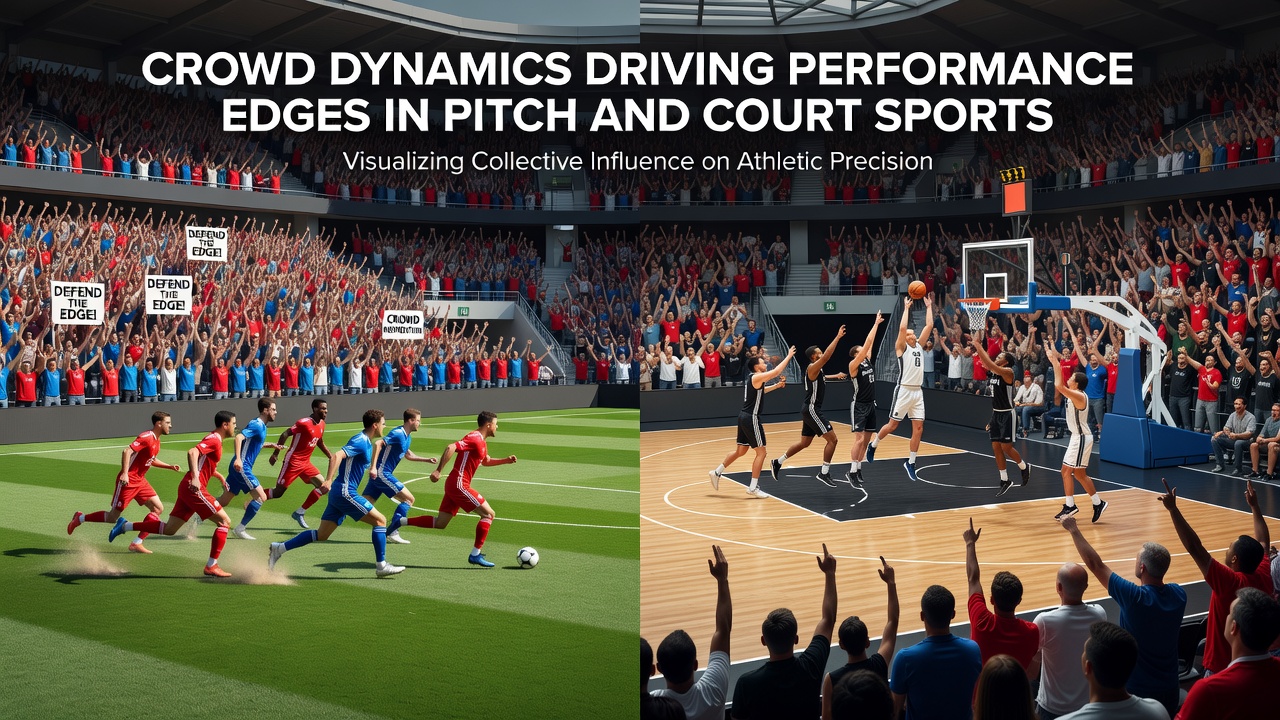
Those studying these environments have observed that players adapt by developing stronger internal cueing systems that bypass external auditory input, yet the adaptation process requires repeated exposure across different venues. International federations tracking match statistics report that surface speed and ball trajectory remain consistent, yet decision-making latency increases measurably under dense crowd conditions regardless of playing surface type.
Strategic Adjustments and Training Protocols
Teams integrate crowd simulation technologies into preparation routines to desensitize athletes to variable noise profiles, and these protocols produce documented reductions in performance variance during away fixtures. Video analysis combined with biometric sensors allows staff to identify which players exhibit the strongest responses to crowd pressure, enabling targeted mental conditioning programs. In June 2026 several leagues schedule high-attendance showcase events that test these adaptations under real-time conditions, providing fresh datasets for longitudinal comparison.
Equipment choices also shift in response to crowd dynamics, with some squads selecting communication devices that operate on frequencies less susceptible to ambient interference. Pitch sports benefit from larger field dimensions that allow players to spread out and reduce collective exposure to concentrated noise pockets, whereas court sports demand tighter spatial awareness that leaves fewer escape routes from sustained spectator influence.
Comparative Data Across Sport Categories
Statistical models developed by North American research centers compare pitch and court environments directly, revealing that home advantage percentages remain higher in basketball than in football when normalized for attendance figures. The difference traces to arena acoustics that concentrate sound energy toward the playing surface, creating a more uniform pressure field than the dispersed patterns found in open stadiums. European athletic associations publish annual reports confirming these variances persist across professional and amateur levels alike.
Travel distance compounds the effect in both categories, yet court athletes encounter fewer environmental variables such as wind or field conditions that might otherwise offset crowd impacts. Observers tracking multi-season trends note that performance edges stabilize when teams accumulate sufficient experience in hostile venues, suggesting that familiarity functions as a moderating factor independent of crowd size.
Conclusion
Crowd dynamics continue to supply measurable performance edges in pitch and court sports through documented physiological and tactical pathways. Data compiled by international sports bodies demonstrate consistent patterns that teams address via specialized training and strategic planning. As venues evolve and attendance patterns shift, these influences remain central to competitive outcomes across both sport categories.