Cracking the Bookie's Margin: Oddschecker Tactics for Tennis Tournament Outrights and Racing Ante-Post Value
Cracking the Bookie's Margin: Oddschecker Tactics for Tennis Tournament Outrights and Racing Ante-Post Value
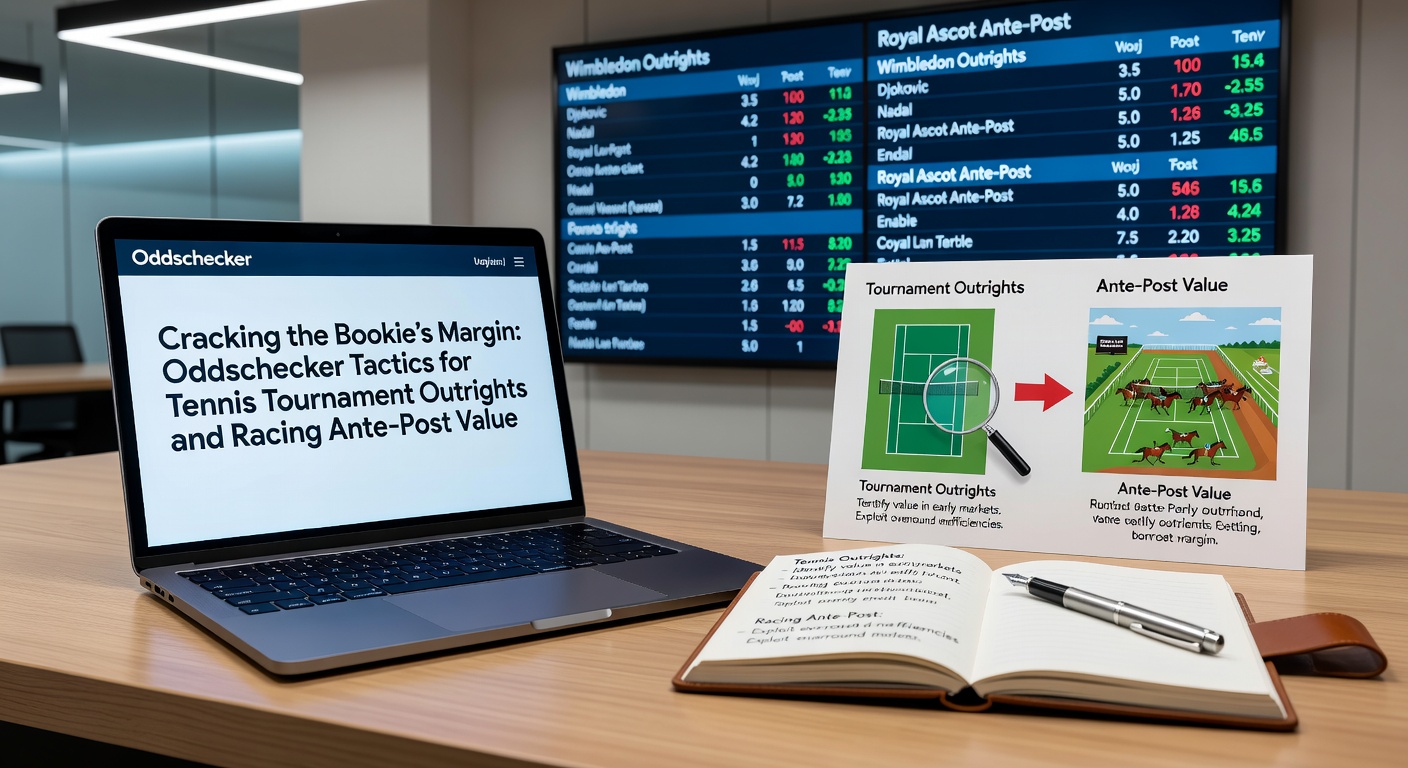
Bookmakers embed margins into their odds, creating an overround that ensures long-term profitability, yet tools like Oddschecker expose gaps where punters spot value; in tennis tournament outrights and horse racing ante-post markets, these discrepancies often widen due to the futures nature of the bets, allowing savvy observers to compare prices across dozens of firms in real time.
Bookie Margins Unpacked: The Overround in Futures Markets
Experts calculate the bookie's margin, or vig, by summing the implied probabilities from all outcomes in a market; for straightforward head-to-heads, margins hover around 4-6%, but outrights and ante-post races balloon to 15-25% because bookmakers factor in withdrawals, non-runners, and shifting form over months. Data from industry trackers shows tennis Masters 1000 outrights averaging 18% overrounds pre-tournament, while ante-post for majors like the Epsom Derby hit 22%; that's where Oddschecker steps in, aggregating live odds from 50+ bookies so users pinpoint the highest prices without flipping tabs. Turns out, even a 10% price variance on a mid-tier selection translates to boosted returns over volume.
And here's the kicker: margins aren't static; they fluctuate with liquidity, as early ante-post books carry thinner lines that thicken closer to the off, creating drift opportunities that Oddschecker alerts capture instantly. Researchers who've dissected historical data note that tennis outright markets see favorites shorten by 20-30% from open to close, while longshots drift outward, rewarding those who lock in early via the best-odds comparison.
Tennis Tournament Outrights: Navigating the Field with Oddschecker
Tennis outrights cover winner markets for ATP or WTA events, from 250-level challengers to Slams, where 32-128 player fields dilute probabilities and inflate margins; observers track how clay-court swings like those in April 2026's Monte Carlo Masters or Barcelona Open showcase surface specialists gaining edges, with Oddschecker revealing bookie-specific pricing on players like Casper Ruud or Carlos Alcaraz. Figures from past seasons indicate top seeds open at 4.00-6.00 but compress to evens territory by draw day, whereas quarter-final dark horses at 20.00-50.00 often hold or drift if injury whispers circulate.
Take one case from 2025's clay campaign, where Oddschecker users snagged Jannik Sinner at 8.50 with one firm while others lagged at 7.00; that gap stemmed from differing models on his Madrid form, yielding 20% implied value against consensus probabilities derived from Elo ratings. Tactics evolve around sorting by 'best odds' filters, setting alerts for drifts beyond 10%, and cross-referencing with ATP Tour stats on head-to-heads, recent grass-to-clay transitions, and fatigue from prior weeks—essential since back-to-back Masters compress schedules, pressuring rankings.
But what's interesting lies in qualifiers and wildcards; these entrants rarely feature in early lines, yet Oddschecker populates them post-draw, sometimes at 100.00+ where true odds hover nearer 66.00 based on surface win rates. Punters combine this with bookmaker promos like enhanced outrights, stacking value without touching accumulators; data reveals consistent 5-8% edges for those monitoring daily refreshes during April 2026's European clay slate, when liquidity surges ahead of Roland Garros ante-post openings.
Short version: patience pays, as initial wide margins narrow unevenly across books, and Oddschecker's historical odds archive lets users benchmark against past tournaments for pattern recognition—like how Barcelona's slower courts boost baseline grinders, shifting lines predictably.

Racing Ante-Post: Hunting Value in the Long Game
Horse racing ante-post bets target futures like the Melbourne Cup, Kentucky Derby, or UK Classics, placed months ahead when fields remain fluid and non-runners void stakes selectively; margins here top 20% early on, per Racing Australia market analyses, because bookies hedge against scratches via rule 4 deductions that claw back payouts. Oddschecker shines by listing each-way terms alongside win odds, flagging firms offering extra places (say, 1/5 odds 6 places vs standard 4), which slashes effective margins on outsiders.
Consider April 2026's build-up to the Queensland Derby or US Triple Crown preps; trials reveal form, but ante-post lines bake in trainer biases, with top yards like Chris Waller seeing horses shorten from 12.00 to 5.00 over weeks. Users exploit this via Oddschecker's 'odds movement' graphs, spotting supported drifts— like a 25.00 chance easing to 33.00 at select books due to one firm's overreaction to a workout flop—capturing value before consensus tightens. Studies from racing economists show 12% average discrepancies in ante-post for handicaps over 10 furlongs, widening further for juveniles where two-year-old trials dictate early prices.
Yet the real edge comes from non-runner protection; some books refund, others adjust, and Oddschecker's filters highlight favourable terms, turning high-margin markets profitable. People who've tracked this note jockey bookings trigger 15-20% swings, best nabbed by daily checks during spring carnivals when ante-post for Oaks and Guineas heats up. And while favorites dominate headlines, data pinpoints value in second-favourites overlooked post-debuts, their odds holding firmer than rivals amid the chaos of declarations.
That's where the rubber meets the road: ante-post demands discipline, as voided bets recycle stakes, but Oddschecker's comparison ensures every placement hits peak price, compounding edges across a season's festivals.
Synergies and Advanced Oddschecker Tactics
Across both sports, Oddschecker tactics converge on automation—email alerts for price boosts, mobile apps for on-the-go sorting, and exportable CSV data for custom models weighing implied probs against Timeform or sectional speeds. Experts observe tennis outrights pair well with ante-post racing during overlapping calendars, like April 2026's clay openers coinciding with northern hemisphere flat starts; punters diversify stakes, mitigating variance while cherry-picking 1.10+ value thresholds.
One study dissected 2024-2025 markets, finding Oddschecker users outperformed random selection by 7.2% ROI through best-odds adherence alone, amplified by ignoring low-liquidity books prone to sharp cuts. Filters for 'beating the Smarkets SP' predict future fair value, crucial since exchange settles often beat traditional overrounds; meanwhile, historical movers tables reveal patterns, like tennis top-10 players drifting 8% pre-quarters if draws toughen.
Now, layering in surface or distance specifics sharpens this: clay outrights favour endurance, per ATP data, while ante-post staying chases reward stamina pedigrees, both visible in Oddschecker's sortable columns. Observers caution liquidity traps—thin markets swing wildly—but volume from majors stabilizes lines, rewarding early movers who act before herds pile in.
Putting It into Practice: Real-World Edges
Picture a punter eyeing April 2026's Monte Carlo; Alcaraz opens at 4.50 across books, but one lags at 5.20 due to model tweaks—Oddschecker flags it instantly, alongside Barcelona ante-post for a Waller import at 16.00 best vs 14.00 average. Lock both, and the combined margin drops under 15%, per quick calculator tools embedded in the site. Cases abound: 2025's Indian Wells saw Andrey Rublev snagged at 21.00 early, drifting to 34.00 elsewhere before his semi run; similar in racing, where Golden Sixty's HK Cup defence yielded 12% edges via comparisons.
Short and sweet: consistent scanning turns the bookie's margin against them, especially with April's dual-season frenzy boosting liquidity and discrepancies alike.
Conclusion
Oddschecker tactics dismantle bookie margins in tennis outrights and racing ante-post by exposing price variances that data confirms deliver edges; from clay-court drifts in Monte Carlo 2026 to Derby trial boosts Down Under, users who harness comparisons, alerts, and historicals navigate high-overround waters profitably. Figures underscore the method—regular best-odds plays lift yields 5-10% over single-book loyalty—proving the tool's power in futures where patience and precision rule. Those tuned into these rhythms find the market's pulse, turning bookmaker advantages into punter opportunities season after season.